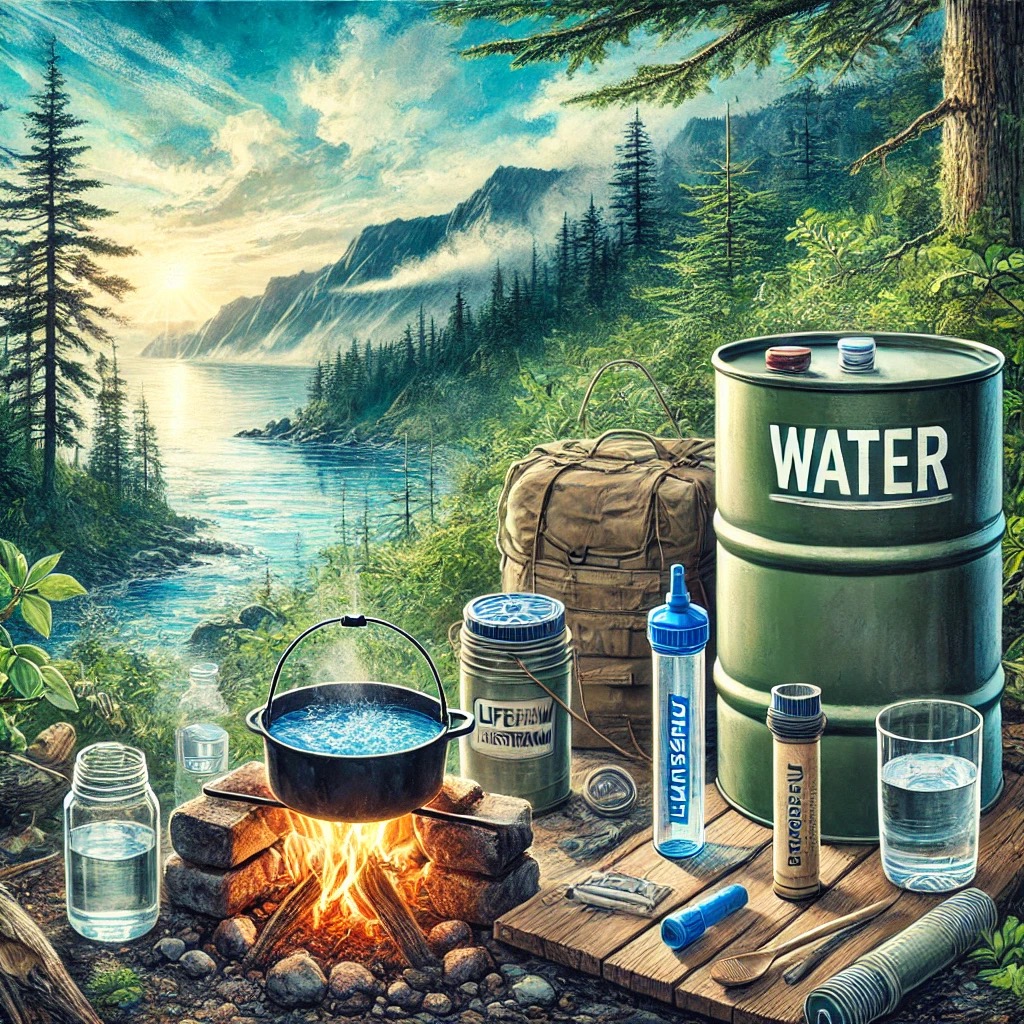
Water is the MOST critical survival resource. A human can survive weeks without food but only days without water. Here’s how to prepare:
- Stockpiling Water
- Minimum Requirement: Store at least one gallon per person per day for at least two weeks.
- Storage Options: Use food-grade containers, sealed bottles, or large water barrels (55-gallon drums work well).
- Rotation Matters: Store in a cool, dark place and rotate every six months to prevent stagnation.
- Purification Methods
- Boiling: The simplest and most reliable method – bring water to a rolling boil for at least one minute.
- Filtration Systems: Portable filters (e.g., LifeStraw, Berkey) remove bacteria and protozoa.
- Chemical Treatment: Household bleach (unscented) can disinfect water – use 8 drops per gallon and let sit for 30 minutes.
- UV Light Sterilization: Devices like SteriPEN use ultraviolet light to kill pathogens.
- Alternative Water Sources
- Rainwater Collection: Use food-safe barrels to collect and filter rainwater.
- Lakes, Rivers, and Streams: Always filter and purify before consumption.
- Well Water: If using a private well, ensure it has a manual pump backup in case of power outages.
- Water for Hygiene & Sanitation
- Non-Potable Water: Store extra for bathing, cleaning, and toilet flushing.
- Hand Sanitizer & Wet Wipes: Reduce water usage for personal hygiene.
- Portable Toilets & Waste Disposal: Plan for sanitation when plumbing fails – composting toilets or lined buckets work in emergencies.
- Long-Term Water Solutions
- Desalination (If Near the Ocean): Some portable devices remove salt and make seawater drinkable.
- Solar Still: Uses evaporation to purify water – slow but effective.
- Community Water Plans: If living in a drought-prone area, consider neighborhood-level water storage solutions.
- Backup Water Supplies
- Bottled Water: Keep extra cases in case your primary supply is compromised.
- Water Bladders: Bathtub bladders (e.g., WaterBOB) store emergency water quickly.
- Hidden Sources: Water heater tanks and toilet tanks (not the bowl) hold emergency water.
- Know Your Weak Spots
- Filtration Knowledge? A water filter is useless if you don’t know how to maintain it.
- Backup Plans? What happens if your main water source is contaminated?
- Mental Preparedness? Panic leads to dehydration – know your plan and act quickly.
Final Note: In many short-term disasters or temporary service interruptions, water supply remains intact. Water infrastructure is typically one of the last services to fail in a crisis. However, in large-scale or long-term emergencies, access to clean water can become a major concern. While it’s unlikely that most people will ever face a total loss of water access, preparing for worst-case scenarios ensures peace of mind and maximum readiness.
 Frontier Properties
Leave a comment